
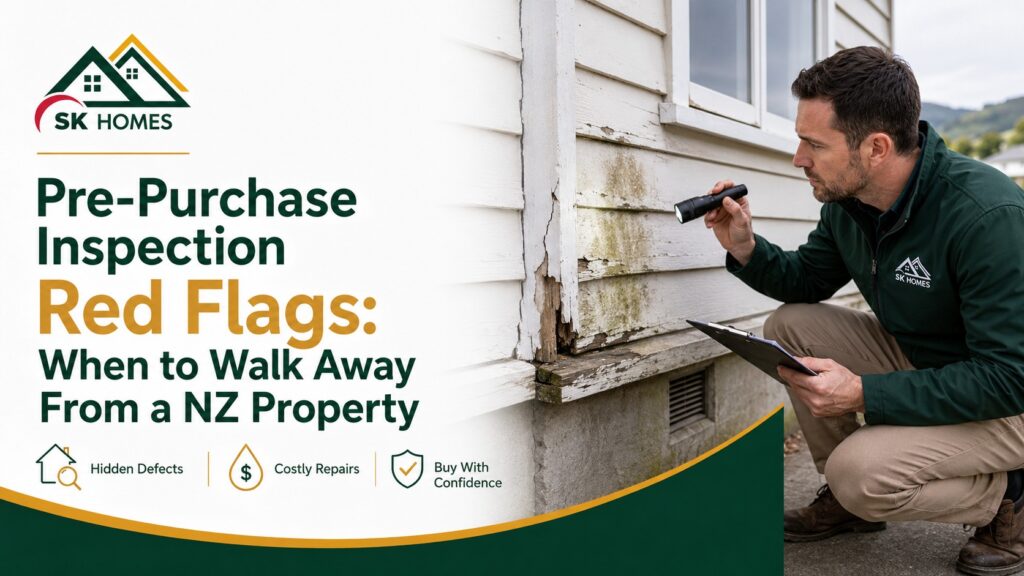
Pre-Purchase Inspection Red Flags: When to Walk Away From a NZ Property
Pre-purchase inspection red flags in NZ are warning signs that should make any buyer pause and think carefully before proceeding with a property purchase. Knowing the pre-purchase inspection red flags that genuinely warrant walking away from a NZ property, versus issues that are simply normal maintenance items, is one of the most valuable skills a buyer can develop before committing to a purchase.
What Counts as a Genuine Red Flag in a NZ Pre-Purchase Inspection?
Not every defect found in a building inspection is a deal breaker. Most properties have some maintenance items, and this is normal. A genuine red flag is something that indicates a fundamental structural, safety, or financial risk that goes well beyond ordinary wear and tear.
Top Pre-Purchase Inspection Red Flags in NZ
1. Significant Structural Movement
Cracking in foundations, walls, or ceilings that is wider than hairline, combined with sticking doors, sloping floors, or visible separation between building elements, can indicate ongoing foundation movement. This typically requires a structural engineer’s assessment, and the cost of remediation can be substantial.
2. Active Moisture Ingress
Visible active water staining, soft or spongy wall linings, persistent musty odours, or elevated moisture meter readings in multiple areas all point to ongoing weathertightness failure. This is especially serious in monolithic-clad properties from the 1992 to 2004 high risk period.
3. Widespread Timber Decay
Rot found in multiple structural areas, particularly in subfloor bearers, joists, or roof framing, suggests a systemic moisture management problem rather than an isolated issue. This often points to wider remediation needs.
4. Unconsented or Non-Compliant Building Work
Additions, conversions, or significant alterations carried out without the required building consent create legal and insurance risk, and can be expensive or impossible to retrospectively legalise.
5. Failing Cladding System Across the Whole Property
If the inspector identifies cladding failure that appears to affect the entire building envelope rather than a single isolated area, full recladding may be the only realistic solution, often costing well over $150,000.
6. Significant Roof Structure Damage
Sagging rooflines, rotted rafters, or evidence of long-term water entry into the roof space point to a roof replacement that goes beyond simple recovering and into structural repair territory.
7. Serious Electrical Safety Hazards
Exposed wiring, evidence of unsafe DIY electrical work, or an overloaded switchboard without safety switches represent genuine fire and electrocution risks requiring immediate professional attention.
8. Evidence of Concealed Defects
Fresh paint or patching applied only to specific areas, particularly around windows, decks, or ceiling stains, can suggest an attempt to mask an underlying problem rather than properly fix it.
What to Do When You Identify a Red Flag
Finding a red flag does not automatically mean you should walk away. Your next steps should be:
- Get a specialist assessment (structural engineer, weathertightness specialist, or licensed electrician) to confirm the extent of the issue
- Obtain repair cost estimates from licensed contractors
- Use this information to renegotiate the purchase price, or decide whether the cost and risk genuinely outweigh the property’s appeal
- Discuss your options with your solicitor regarding your building inspection clause and withdrawal rights
When Walking Away Is the Right Decision
You should seriously consider walking away when multiple major red flags appear together, when the cost of remediation approaches or exceeds a significant proportion of the purchase price, or when the vendor is unwilling to negotiate or disclose further information about known issues. Trust the documented evidence from your professional inspection over emotional attachment to a property.
Frequently Asked Questions: Pre-Purchase Inspection Red Flags NZ
Is cracking always a red flag?
No. Hairline cracking is common and often cosmetic. Wider cracking combined with other movement indicators (sticking doors, sloping floors) is the genuine concern.
Should I walk away from any property with moisture issues?
Not necessarily. Isolated, fully remediated moisture issues with documentation can be acceptable. Active, widespread, or undocumented moisture problems are the real red flag.
How serious is unconsented building work?
This varies depending on the work involved, but it can create significant legal, insurance, and resale complications, and should always be investigated further before proceeding.
Can I still negotiate after finding a red flag?
Yes, red flags are often used as the basis for price renegotiation, provided the vendor is willing to engage and the numbers still work for you.
What if my inspector recommends a specialist but I can’t get one before my deadline?
Discuss extending your due diligence period with your solicitor, or consider whether to withdraw under your building inspection clause if you cannot get sufficient information in time.
Are red flags more common in older NZ homes?
Generally yes, though specific risk factors like monolithic cladding affect a particular construction era regardless of overall property age.
How do I find a structural engineer for further assessment?
Your building inspector can typically recommend qualified structural engineers in your area as part of their specialist referral process.
Does a red flag always mean expensive repairs?
Not always, but the items listed here typically carry meaningful cost and risk, which is exactly why they warrant careful further investigation before purchase.
Can SK Homes help interpret red flags found during inspection?
Yes. SK Homes NZ Limited provides clear explanations of any significant findings and recommends appropriate specialist referrals as part of every inspection report.
How do I book a thorough pre-purchase inspection in NZ?
Contact SK Homes NZ Limited at info@skhomes.co.nz or call +64 290 4504 642 to book in Auckland, Hamilton, or Palmerston North.