
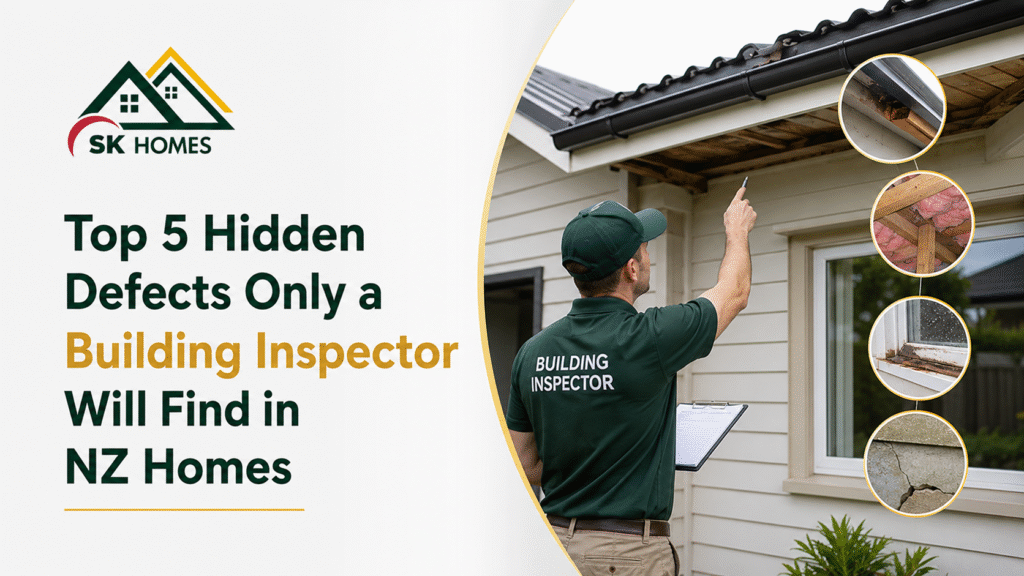
Top 5 Hidden Defects Only a Building Inspector Will Find in NZ Homes
Hidden defects that only a building inspector will find in NZ homes are often the most financially significant issues facing property buyers. While buyers can spot obvious problems during an open home, stained ceilings, cracked walls, damaged joinery, the most costly defects are frequently invisible to the untrained eye. This guide covers the top 5 hidden defects that only a building inspector will find in NZ homes, and why commissioning a professional NZS 4306:2005 compliant inspection before purchase is one of the smartest financial decisions you can make.
1. Hidden Moisture Damage in Wall Cavities, The Top Hidden Defect Found by NZ Building Inspectors
Active or historical moisture ingress into wall cavities is the single most financially significant hidden defect that building inspectors find in NZ homes, particularly in Auckland properties with monolithic cladding built between 1992 and 2004. The exterior of a property may appear sound and well-maintained while internally, wall framing is rotting, fixings are corroding, and mould is growing inside the cavity.
A trained building inspector will identify the risk factors that indicate potential cavity moisture, cracks in the cladding surface, staining around window junctions, failed or missing flashings, evidence of previous repair attempts, or elevated moisture readings on a moisture meter. The inspector will then recommend a specialist weathertightness investigation to confirm the extent of damage before you commit to purchase.
2. Subfloor Timber Decay and Pile Failure
The subfloor space beneath older NZ homes, particularly pre-1960s villas and bungalows, frequently contains issues that are completely invisible from inside the home but can cost tens of thousands of dollars to remediate. Common subfloor defects found by building inspectors include:
- Rotted or undersized timber bearers and joists
- Failed, cracked, or leaning concrete or timber piles
- Active moisture from lack of a ground vapour barrier
- Evidence of borer or termite activity in timber framing
- Inadequate ventilation causing chronic dampness
Without a subfloor inspection, which requires the inspector to physically enter the subfloor space, these issues simply cannot be found. A buyer walking through the home would have no idea that the floor structure below them needs significant work.
3. Roof Framing Issues Hidden in the Roof Space
The roof space above the ceiling lining is another area where significant hidden defects are regularly found by NZ building inspectors. Unless the inspector enters the roof space (via an access hatch), issues in this area are completely invisible. Common roof space defects include:
- Cracked, split, or undersized rafters and purlins
- Evidence of past or active roof leaks, staining, mould growth, or wet insulation
- Missing or inadequate insulation
- Blocked or missing roof ventilation
- Unauthorised structural modifications to roof framing
4. Electrical System Deficiencies
Electrical deficiencies that only a building inspector will find in NZ homes include outdated wiring systems that present a fire or electrocution risk. A building inspector conducting an NZS 4306:2005 compliant inspection will look at the electrical switchboard and visible wiring as part of their services assessment. Common electrical findings include:
- Old ceramic fuses rather than modern circuit breakers
- Absence of residual current devices (RCDs/safety switches)
- Aluminium wiring (common in some 1970s NZ homes) which carries higher fire risk
- Evidence of DIY electrical work that is not compliant or safe
- Overloaded switchboards or multi-socket adapters used as permanent solutions
5. Drainage Failures Hidden Beneath the Ground
Underground drainage failures are genuinely hidden from view and can only be suspected from surface evidence that a trained inspector knows to look for. A building inspector will check visible drainage outlets, note evidence of blocked or overflowing gutters, identify ground areas that pond water, and assess whether stormwater and wastewater drainage appears functional. Surface evidence that suggests underground drainage problems includes:
- Depressions or sinkholes in the ground near drainage lines
- Lush, unusually green grass in specific areas suggesting leaking pipes
- Persistent damp subfloor conditions despite adequate ventilation
- Slow drains inside the property
Where drainage problems are suspected, a specialist CCTV drain inspection is recommended. More information on building defects is available from BRANZ (branz.co.nz).
Frequently Asked Questions: Hidden Defects Building Inspector NZ
What is the most expensive hidden defect to fix in NZ homes?
Weathertightness remediation involving full recladding is typically the most expensive, commonly costing $150,000 to $500,000 or more depending on the size and extent of damage.
Can I spot these hidden defects myself during an open home?
Some risk indicators can be spotted by observant buyers (cracked cladding, staining around windows), but the actual extent of hidden damage requires a professional inspection including subfloor and roof space access.
Do all NZ building inspectors check the subfloor and roof space?
An NZS 4306:2005 compliant inspection requires the inspector to access all accessible areas of the property, including subfloor and roof space. Always confirm this with your inspector before booking.
What should I do if my inspector finds potential hidden moisture damage?
Commission a specialist weathertightness investigation (invasive moisture testing) before going unconditional on the purchase.
Are hidden defects more common in Auckland properties?
Auckland has a higher proportion of monolithic-clad properties from the leaky building era (1992-2004), making hidden weathertightness damage more prevalent than in some other NZ regions.
Is a building inspection worth it for a newly renovated property?
Absolutely. Cosmetic renovations can mask existing defects or introduce new ones. A building inspector can often detect signs of patch repairs or cosmetic cover-ups that conceal underlying issues.
How do I know if the inspection covered the subfloor and roof space?
Your report should specifically address what was and was not inspected. If the subfloor or roof space was accessible, findings from those areas should be documented.
What is borer and is it a serious defect in NZ homes?
Borer (wood-boring insects) is common in older NZ homes with native timber framing. Mild borer infestation is manageable; severe infestation can compromise structural integrity and requires treatment.
Can hidden drainage defects cause foundation problems?
Yes. Leaking underground drains can cause ground settlement, undermine foundations, and cause foundation movement over time.
How do I book a thorough inspection that covers all hidden defect areas?
Contact SK Homes NZ at info@skhomes.co.nz or +64 290 4504 642. Our NZS 4306:2005 compliant inspections include subfloor and roof space access.