
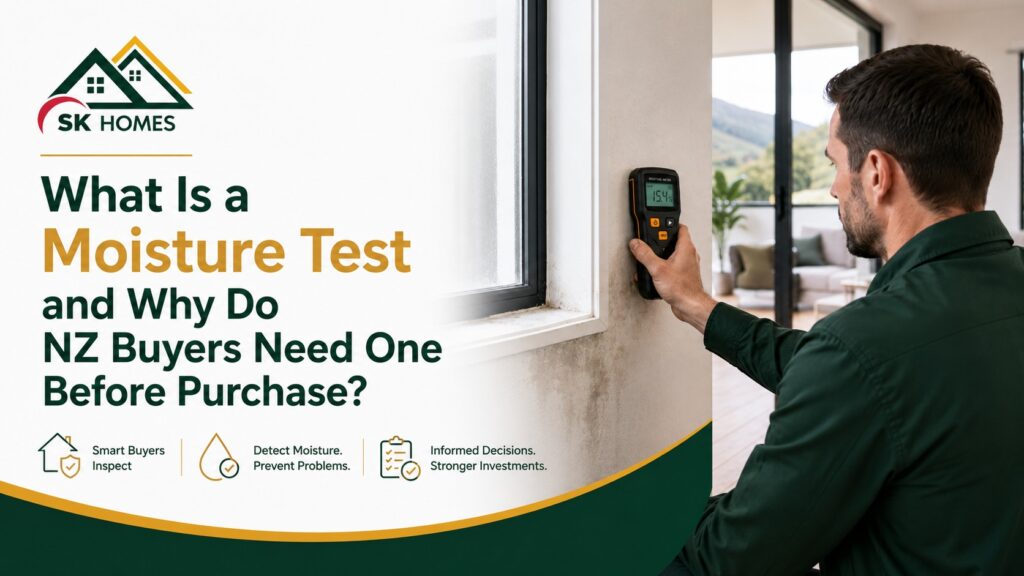
What Is a Moisture Test and Why Do NZ Buyers Need One Before Purchase?
What is a moisture test and why do NZ buyers need one before purchase is a question worth understanding before you finalise any property purchase. A moisture test in NZ is a diagnostic process used to check building materials for elevated moisture content, helping buyers identify hidden weathertightness problems that may not be visible during a standard visual inspection.
What Is a Moisture Test?
A moisture test involves using a moisture meter, and where necessary invasive probes, to measure the moisture content of building materials such as timber framing, plaster, and other cladding substrates. The test identifies whether moisture levels are within normal ranges or elevated in a way that suggests water has entered the building structure.
Why NZ Buyers Need a Moisture Test Before Purchase
New Zealand’s housing stock includes a significant number of properties built between 1992 and 2004 using monolithic cladding systems that were prone to weathertightness failure. Moisture damage inside wall cavities is often completely invisible from outside or inside the home until it becomes severe. A moisture test gives buyers an objective, evidence-based assessment of risk before committing to a purchase, rather than relying on visual appearance alone.
What Happens During a Moisture Test?
- The assessor takes baseline readings in low-risk areas of the property to establish what a normal, dry reading looks like for that specific building
- Comparative readings are then taken at higher-risk locations, including window sills, deck junctions, roof penetrations, and any areas with visible cracking or staining
- Where elevated readings are found, the assessor may recommend invasive testing, which involves drilling small holes to insert a probe directly into the wall cavity for a more accurate reading
- Findings are documented with location references and included in a written report
How Accurate Is a Moisture Test?
Non-invasive moisture meters provide a reliable screening tool but have limitations, typically only detecting moisture within a few centimetres of the surface. Invasive testing provides a more accurate picture of conditions deeper within the wall cavity but requires the property owner’s permission, since it involves creating small holes that need to be patched afterward. A combination of both methods, interpreted by an experienced assessor, provides the most reliable overall picture.
When Is a Moisture Test Most Important?
A moisture test is particularly important when:
- The property has monolithic cladding (smooth plaster-style finish with no visible joints)
- The building was constructed between 1992 and 2004
- There is visible cracking, staining, or evidence of past repair work on the cladding
- A standard pre-purchase building inspection has flagged risk factors warranting further investigation
- The property has a complex roof design with multiple junctions and penetrations
What Do Moisture Test Results Mean for Your Purchase?
If a moisture test returns normal, low readings throughout the property, this provides good confidence that the building envelope is performing as it should. If elevated readings are found, this does not necessarily mean the property should be avoided, but it does mean further investigation, repair cost estimates, and likely price renegotiation should follow before you commit to going unconditional.
For technical guidance on moisture testing standards, BRANZ publishes recognised reference material on acceptable moisture content thresholds for NZ building materials. See branz.co.nz for further detail.
Frequently Asked Questions: Moisture Test NZ Property
Is a moisture test included in a standard pre-purchase inspection?
A general moisture meter check is typically included, but a thorough, systematic moisture test across multiple locations is more commonly part of a dedicated weathertightness assessment.
How much does a moisture test cost in NZ?
A standalone moisture test typically costs $300 to $600. If combined with a full weathertightness assessment, the cost may be higher, particularly if invasive testing is included.
Can I do my own moisture test before buying?
Basic consumer moisture meters are available, but interpreting results correctly requires training and experience. Professional testing is strongly recommended for an accurate assessment.
Does a moisture test show the cause of moisture, not just its presence?
A moisture test confirms the presence and approximate extent of moisture but typically requires further investigation, such as removing linings, to confirm the exact cause and source.
How long does a moisture test take?
A standard moisture test typically takes one to two hours on site, depending on property size and the number of test points required.
Should I get a moisture test even if the property looks fine?
Yes, particularly for higher-risk property types, since the whole point of moisture testing is to catch issues that are not visible to the naked eye.
Can a vendor refuse to allow invasive moisture testing?
Yes, since invasive testing requires creating small holes in the property. If refused, you can rely on non-invasive results or factor this uncertainty into your decision.
What moisture content reading is considered a problem?
This depends on the material and context, which is why interpretation by an experienced assessor matters more than a single number in isolation.
Does a clean moisture test guarantee no future problems?
No test can guarantee future performance, but a clean moisture test provides strong evidence the building envelope is currently performing well.
How do I book a moisture test before buying a NZ property?
Contact SK Homes NZ Limited at info@skhomes.co.nz or call +64 290 4504 642 to arrange testing in Auckland, Hamilton, or Palmerston North.