
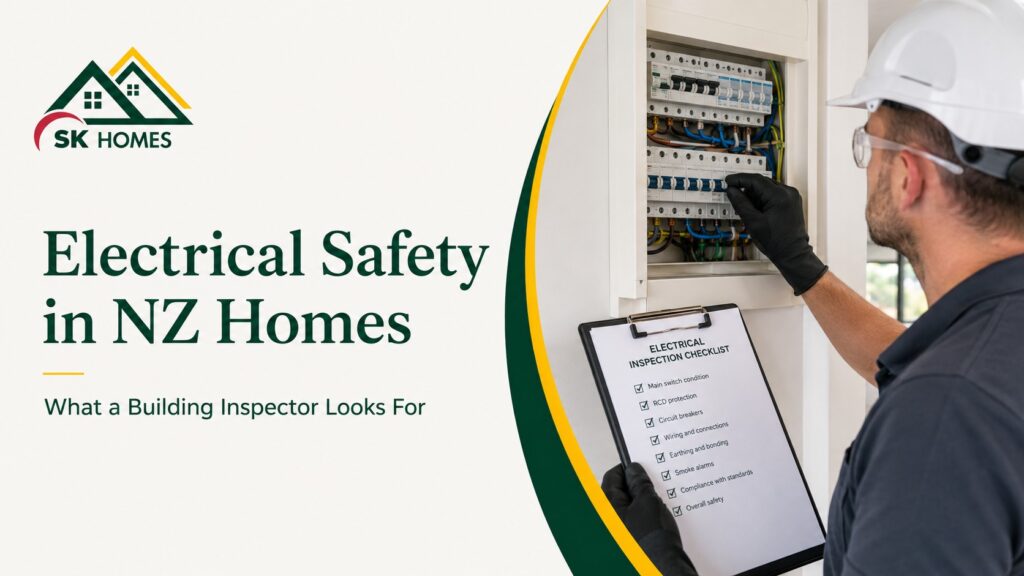
Electrical Safety in NZ Homes: What a Building Inspector Looks For
Electrical safety in NZ homes is a critical area assessed during every pre-purchase building inspection, since outdated or unsafe electrical systems can present genuine fire and electrocution risks. Understanding what a building inspector looks for regarding electrical safety in NZ homes helps buyers appreciate why this assessment matters and what red flags warrant further specialist investigation.
What Does a Building Inspector Check for Electrical Safety?
Under NZS 4306:2005, building inspectors conduct a visual assessment of accessible electrical components as part of a standard pre-purchase building inspection. This is a visual check only, not a formal electrical safety certification, but it identifies many common visible risk indicators.
Key Electrical Safety Checks During NZ Pre-Purchase Inspections
Switchboard Condition and Type
The inspector checks whether the switchboard uses modern circuit breakers or older ceramic fuses, and whether it appears to have adequate capacity for the property’s electrical demands without being overloaded.
Presence of Safety Switches
Residual current devices, commonly known as safety switches, are a critical modern safety feature. The inspector checks whether these are installed, as their absence is a notable finding in older properties.
Wiring Type and Visible Condition
Where visible, the inspector notes the apparent wiring type, including any aluminium wiring common in some 1970s NZ homes, which carries higher fire risk than modern copper wiring.
Visible DIY or Non-Compliant Work
Signs of unsafe DIY electrical work, such as exposed wiring, improvised connections, or non-standard installations, are noted as significant findings requiring specialist investigation.
Outlets and Fixtures
The inspector checks visible power outlets and light fixtures for obvious damage, overloading via multi-socket adapters used as permanent solutions, or other visible safety concerns.
Common Electrical Safety Issues Found in NZ Homes
- Old ceramic fuse boxes rather than modern circuit breaker systems
- Absence of safety switches, particularly in pre-1990s properties
- Aluminium wiring in some 1970s-era homes, associated with higher fire risk
- Overloaded switchboards or extensive use of multi-socket power boards as a permanent solution
- Evidence of unsafe or non-compliant DIY electrical modifications
What Happens If Electrical Issues Are Found?
If your building inspection identifies electrical safety concerns, the report will recommend a licensed electrician conduct a full electrical safety inspection and any required remediation work before you proceed with your purchase, or use the findings to negotiate your purchase price accordingly.
For information on licensed electrical work standards in NZ, see ewrb.govt.nz (the Electrical Workers Registration Board).
Frequently Asked Questions: Electrical Safety NZ Homes
Does a building inspection include a formal electrical safety certificate?
No, a standard building inspection is a visual assessment only. A formal electrical safety inspection requires a licensed electrician.
Are safety switches a legal requirement in NZ rental properties?
Safety switch requirements have evolved over time under building code updates. Check current requirements with a licensed electrician for your specific property.
How dangerous is aluminium wiring?
Aluminium wiring is associated with higher fire risk due to connection issues over time, and properties with this wiring type often benefit from specialist electrical assessment.
Can a building inspector tell me if rewiring is needed?
An inspector can flag visible risk indicators and recommend a licensed electrician’s assessment, but the final determination on rewiring needs comes from the electrical specialist.
How much does electrical rewiring cost in NZ?
Full rewiring of a standard NZ home typically costs $10,000 to $25,000 depending on property size and accessibility. Contact a licensed electrician for accurate quotes.
What is the most common electrical issue found in older NZ homes?
Outdated ceramic fuse boxes and absence of modern safety switches are among the most commonly identified electrical safety findings in older NZ properties.
Should I get a specialist electrical inspection in addition to a building inspection?
For properties with visible electrical concerns or significant age, a specialist electrician’s assessment provides more detailed findings than a general building inspection.
Does electrical safety affect insurance for NZ properties?
Yes, insurers may have specific requirements or exclusions related to electrical safety, particularly for older properties with non-compliant wiring.
Can I negotiate price based on electrical findings?
Yes, documented electrical safety concerns provide a legitimate basis for price negotiation or requesting remediation before settlement.
How do I book a pre-purchase inspection that includes electrical assessment?
Contact SK Homes NZ Limited at info@skhomes.co.nz or call +64 290 4504 642 to book in Auckland, Hamilton, or Palmerston North.