
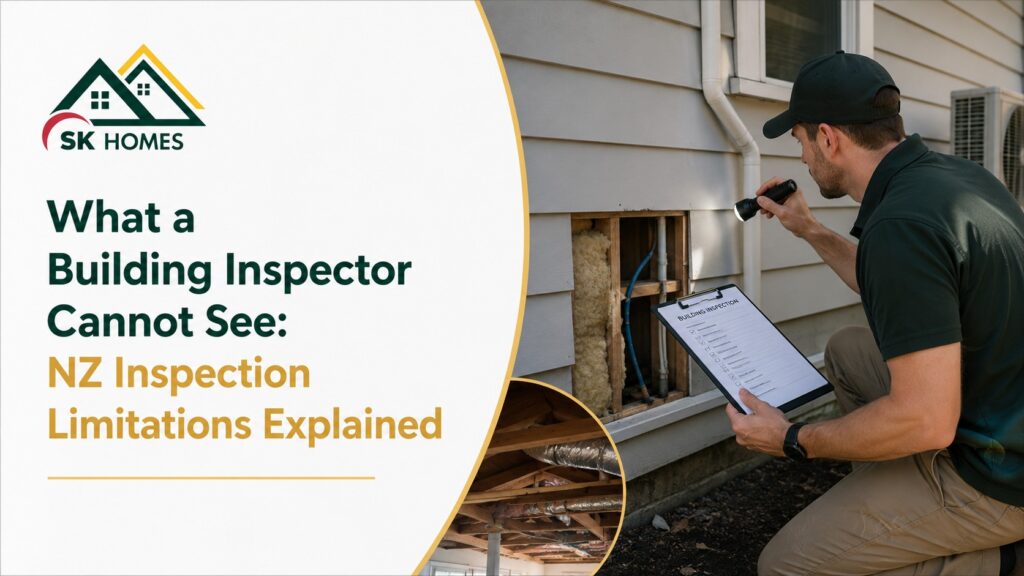
What a Building Inspector Cannot See: NZ Inspection Limitations Explained
What a building inspector cannot see is something every NZ property buyer must understand before relying on a pre-purchase inspection report. A building inspector cannot see hidden defects behind wall linings, under floor coverings, inside wall cavities, or in any area that is inaccessible during a visual, non-invasive inspection. Understanding what a building inspector cannot see in NZ protects you from unrealistic expectations and helps you know when to commission specialist investigations.
This guide explains the limitations of a pre-purchase building inspection conducted under NZS 4306:2005, and what buyers can do to protect themselves from hidden defects that fall outside the scope of a standard inspection.
What NZS 4306:2005 Says About Building Inspector Limitations
NZS 4306:2005 Residential Property Inspection is the New Zealand Standard that governs pre-purchase building inspections. It defines a pre-purchase inspection as a visual, non-invasive inspection of the accessible areas of a property. The standard explicitly acknowledges that there are things a building inspector cannot see, and requires the inspection report to clearly state these limitations.
According to NZS 4306:2005, a building inspector is not required to:
- Move furniture, floor coverings, or stored items to access areas beneath or behind them
- Remove or damage any part of the building to investigate concealed areas
- Inspect areas that are physically inaccessible or unsafe to access
- Operate systems or equipment that requires specialist knowledge or carries risk
- Provide a guarantee that defects not visible at the time of inspection do not exist
Common Things a Building Inspector Cannot See in NZ Properties
Hidden Moisture Damage Inside Walls
Moisture damage inside wall cavities is one of the most significant things a building inspector cannot see. If weathertightness failures have caused water to enter a wall cavity, the damage may be extensive, rotted framing, corroded fixings, mould, while the interior lining still appears intact. A building inspector can identify risk factors (such as monolithic cladding without visible cavity drainage, poorly flashed windows, or complex roof geometry) and recommend specialist investigation, but cannot confirm the extent of damage without opening the wall.
Defects Under Floor Coverings
A building inspector cannot see beneath fitted carpet, vinyl, or timber flooring. Defects such as rotted subfloor boards, moisture damage to particleboard flooring, or failing adhesive bonds in floating floors are not visible unless floor coverings are lifted.
Inside Wall and Ceiling Cavities
Insulation deficiency, pest damage, wiring issues, and structural framing problems inside wall and ceiling cavities are beyond the scope of what a building inspector can see without access panels or invasive investigation.
Underground Pipes and Drainage
The condition of underground drainage pipes, sewer connections, and stormwater systems cannot be assessed visually. A building inspector can check visible drainage outlets and note surface evidence of drainage problems, but a dedicated drain inspection using CCTV camera equipment is required to assess underground pipe condition.
Roof Space in Limited Access Properties
Where roof space access is not available, blocked, or unsafe, a building inspector cannot assess roof framing, insulation, or evidence of roof leaks from within the roof space. This is a common limitation in properties with low-pitch roofs or unusual construction.
Asbestos and Hazardous Materials
Identifying the presence of asbestos-containing materials, lead paint, or other hazardous substances requires specialist testing. A building inspector conducting a standard NZS 4306:2005 inspection is not required to test for these materials, though they may note the age and type of materials that are commonly associated with asbestos use in NZ.
What a Building Inspector Can Do About Suspected Hidden Defects
While a building inspector cannot see inside walls or under floor coverings, a thorough NZS 4306:2005 compliant inspector will identify risk factors that suggest hidden defects may exist and recommend specialist investigation. For example:
- Staining on interior linings may indicate moisture ingress behind the wall, the inspector will note this and recommend investigation
- Uneven or bouncy flooring may indicate subfloor damage, the inspector will note this and recommend a licensed builder investigate
- Visible evidence of past repairs may indicate a recurring problem, the inspector will document this and recommend further investigation
When to Get Additional Specialist Investigations
For properties where significant hidden defects are suspected, particularly properties with monolithic cladding, complex roof geometry, or a history of moisture issues, buyers should consider commissioning specialist investigations in addition to a standard building inspection. Options include:
- Invasive moisture investigation (drilling into wall cavities to insert a moisture probe)
- Thermal imaging inspection
- CCTV drain inspection
- Structural engineer’s assessment
- Specialist weathertightness report
Your NZS 4306:2005 compliant inspection report will recommend these where appropriate. Learn more about NZ building standards at building.govt.nz.
Frequently Asked Questions: What a Building Inspector Cannot See NZ
Can a building inspector see inside walls?
No. Under NZS 4306:2005, a pre-purchase inspection is visual and non-invasive. A building inspector cannot open walls, remove linings, or access concealed areas to look inside walls.
What is the most common hidden defect in NZ homes?
Hidden moisture damage inside wall cavities, particularly in monolithic-clad properties built between 1992 and 2004, is the most significant hidden defect in NZ’s housing stock.
Can a building inspector check for asbestos?
A standard building inspector cannot test for asbestos. An accredited asbestos assessor and specialist testing is required to identify asbestos-containing materials.
What if a defect is found after purchase that wasn’t in the report?
If the defect was genuinely hidden and not visible during the inspection, and the report clearly disclosed the inspection limitations, the inspector is generally not liable. NZS 4306:2005 requires limitations to be clearly stated in the report.
Should I get additional specialist investigations?
For high-risk properties (monolithic cladding, complex rooflines, past moisture issues), additional specialist investigations alongside a standard pre-purchase inspection are strongly recommended.
Can a building inspector tell if there is asbestos in my NZ home?
Inspectors can note materials that are consistent with historical asbestos use (such as textured ceiling coatings in pre-1990 homes) but cannot confirm the presence of asbestos without specialist testing.
What areas are typically inaccessible during a NZ building inspection?
Common inaccessible areas include: roof space with no hatch or unsafe access, subfloor with insufficient clearance, areas blocked by stored items, and wall cavities.
Does the inspection report note what wasn’t inspected?
Yes. A NZS 4306:2005 compliant report must state any areas that were not inspected and the reason (inaccessible, unsafe, etc.).
Is a pre-purchase inspection still worth doing if there are limitations?
Absolutely. Despite limitations, a professional pre-purchase inspection significantly reduces risk by identifying visible defects, risk factors, and areas that warrant specialist investigation before purchase.
How do I book a pre-purchase inspection with SK Homes?
Contact SK Homes NZ Limited at info@skhomes.co.nz or call +64 290 4504 642 to book in Auckland, Hamilton, or Palmerston North.