
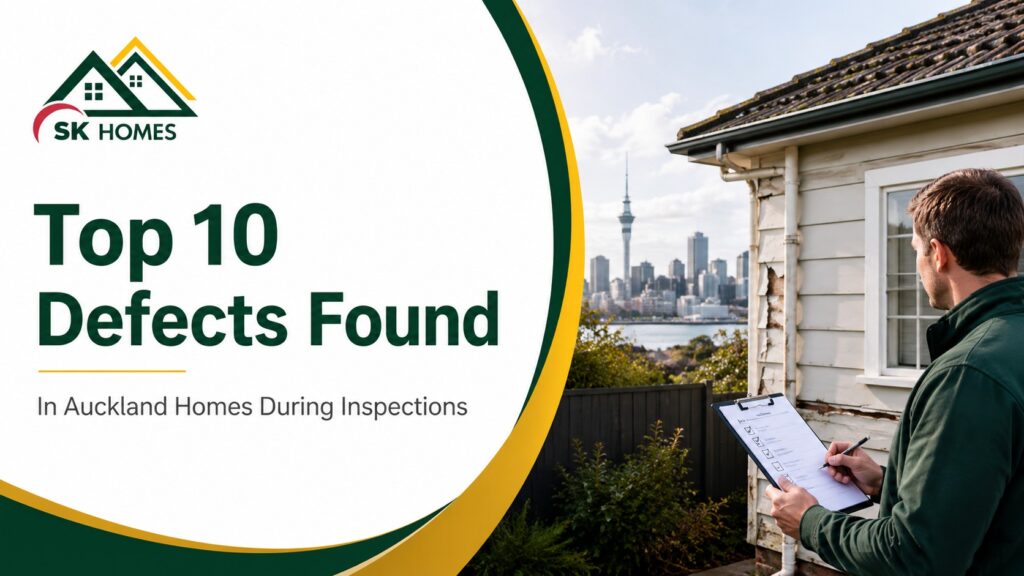
Top Defects Found Auckland Homes During Inspections: A Full Guide
Top defects found Auckland homes during inspections consistently include weathertightness failures, subfloor moisture, and roof deterioration. Knowing these patterns helps buyers ask the right questions before signing.
The top defects found in Auckland homes during inspections follow recognisable patterns shaped by the city’s housing stock age and construction era.
After conducting hundreds of pre-purchase building inspections across Auckland, Hamilton, and Palmerston North, certain defects come up again and again. Knowing what to expect helps you ask the right questions – and understand your report when it arrives.
Here are the ten most common defects we find during Auckland pre-purchase inspections.
1. Subfloor Moisture and Poor Ventilation
This is the most common significant finding in Auckland inspections. Many older homes have subfloor spaces with inadequate cross-ventilation and no ground moisture barrier, allowing moisture to rise from the soil into the timber framing. Left unaddressed, this leads to fungal decay, borer, and structural deterioration. We take moisture readings at every subfloor inspection and flag elevated levels as requiring attention.
2. Weathertightness Risk – Leaky Building Era Properties
Auckland’s concentration of 1994-2004 era homes with monolithic cladding makes weathertightness risk a critical assessment point in every inspection. Failed or missing flashings and direct-fix cladding systems without drainage cavities regularly show evidence of moisture penetration – often invisible on the surface but detectable with a moisture meter.
3. Roof Flashings, Gutters, and Downpipes
Failed or missing flashings at roof-to-wall junctions, around skylights, and at penetrations are extremely common. Blocked or damaged gutters that overflow against the building, and downpipes that discharge too close to the foundation, are also frequently noted. Roofing materials past their service life – particularly older iron or tile roofs on properties 25 years and older – are a regular maintenance finding.
4. Inadequate or Missing Ceiling Insulation
A large proportion of Auckland’s older housing stock has no ceiling insulation, insufficient depth, or insulation that has been disturbed, compressed, or damaged by pests over the years. Beyond comfort and energy efficiency, this has direct Healthy Homes compliance implications for rental properties.
5. Deferred Exterior Maintenance
Exterior paint failure on weatherboard homes is among the most common maintenance findings in Auckland. Once paint fails, weatherboards are exposed to moisture and begin to swell, crack, and rot – particularly at horizontal joints and around window frames. Be alert to properties where fresh paint has been applied prior to listing – this can conceal failing boards underneath.
6. Wet Area Waterproofing Failures
Failed tile grouting, cracked or loose tiles, aged silicone seals around baths and showers, and inadequate waterproofing behind shower linings are common across Auckland properties of all ages. Water penetration in wet areas spreads to adjacent framing and flooring – often extending well beyond the visible area by the time it is identified. We use moisture meters to check wall areas adjacent to showers where access allows.
7. Ageing Plumbing
Many older Auckland homes have original copper or galvanised steel plumbing that has reached or is approaching the end of its serviceable life. Hot water cylinders over 15 to 20 years old are regularly noted. Evidence of DIY plumbing modifications – unauthorised connections, non-standard fittings, or signs of past leaks – is also common. Our inspection is visual only, but we flag obvious concerns clearly.
8. Electrical Switchboard Concerns
Older switchboards with ceramic fuses or unenclosed wiring, evidence of DIY electrical work, and switchboards lacking RCD (residual current device) protection are found regularly. These are flagged as warranting a full electrical assessment by a registered electrician – they are outside the scope of a building inspection but too important not to mention.
9. Foundation and Pile Issues
Settlement, decay, and borer damage in foundation piles are found regularly in older Auckland properties. Cracking in block or concrete foundations, piles that have rotted or settled unevenly, and timber framing with signs of movement are all significant findings that warrant further structural assessment before purchase.
10. Deck and Balcony Defects
Decks and balconies are consistently among the most defect-prone elements of Auckland homes. Rotting decking boards, corroded fixings and joist hangers, inadequate or non-compliant balustrade heights, and failed waterproofing membranes on tiled or enclosed decks are all common findings. These are safety issues as well as maintenance items – both are addressed in the report.
A Note on What These Findings Mean
Finding some of these items in a report does not automatically mean a property is a bad purchase. Context matters – the severity, the cost of remediation, the age of the property, and the purchase price all factor into your decision. What matters is that you know what you are buying before settlement, not after.
That is exactly what a professional pre-purchase building inspection from SK Homes NZ provides.
Book a NZS 4306:2005 compliant pre-purchase building inspection with SK Homes NZ Limited. Serving Auckland, Hamilton, and Palmerston North.
📧 info@skhomes.co.nz | 🌐 skhomes.co.nz | 📞 029 045 0464
Related Articles
- What is a Pre-Purchase Building Inspection in NZ?
- How to Read a Pre-Purchase Building Report
- Leaky Home Risk in Auckland
Top Defects Found Auckland Homes During Inspections: Key Points for NZ Property Owners
The top defects found Auckland homes during inspections align closely with BRANZ research on building failure modes in New Zealand, which identifies weathertightness, subfloor moisture, and roof deterioration as the most prevalent categories. For more information, visit BRANZ.