
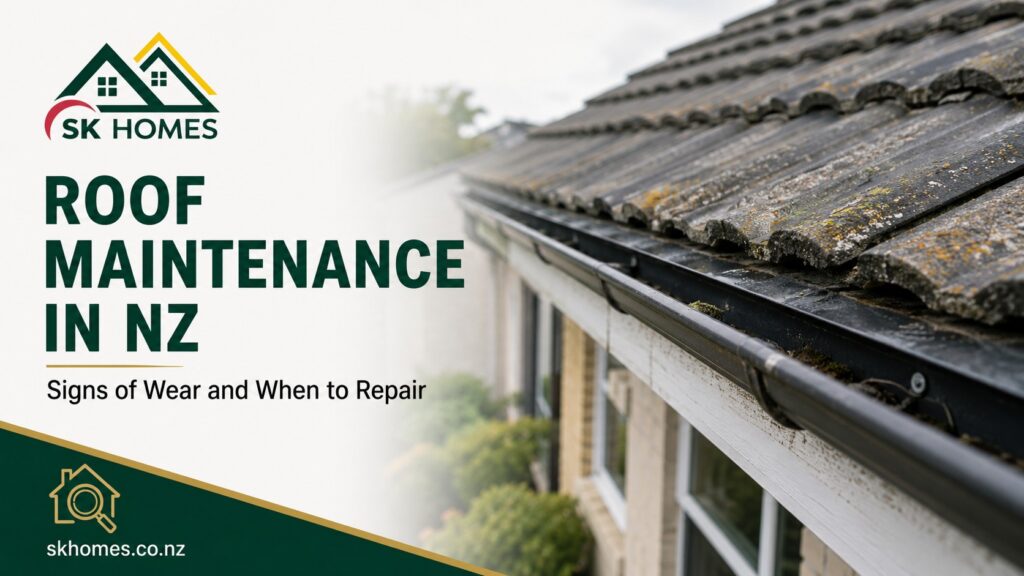
Roof Maintenance in NZ: Signs of Wear and When to Repair
Roof maintenance in NZ is essential, the roof is the primary line of defence for any New Zealand home against the weather.
The roof is the primary line of defence for any New Zealand home against the weather. When it fails, the consequences cascade through the rest of the building – ceiling damage, wall lining damage, insulation degradation, structural timber decay, and mould. According to BRANZ, roof and weathertightness failures are among the most common and most costly defects found in NZ residential buildings. Regular maintenance and early detection of roof wear is one of the highest-return investments a NZ homeowner can make.
Common Roof Types in NZ and Their Maintenance Needs
Corrugated Steel (Iron) Roofing
The most common roof type in NZ, covering the majority of suburban homes in Auckland, Hamilton, and Palmerston North. Modern steel roofing (ColorSteel, Zincalume) has a service life of 40 to 70 years with appropriate maintenance. Older unpainted galvanised iron has a shorter life. Key maintenance requirements: keep gutters clear, inspect and replace failed sealant around penetrations and fixings, repaint when the coating begins to thin, and address any rust spots immediately before they spread.
Concrete and Terracotta Tiles
Common in Auckland suburbs from the 1960s through 1990s. Tiles themselves are long-lasting but the pointing (mortar) between tiles and the sarking (underlay) beneath them deteriorate over time. Cracked or slipped tiles allow water ingress. Repointing of ridge and hip tiles is typically needed every 15 to 25 years. Failed sarking is a more significant issue – it requires re-roofing to address properly.
Butynol and Membrane Flat Roofs
Common on flat or very low-pitch roofs and deck areas. Membrane roofs have a limited lifespan of 15 to 25 years for butynol and 20 to 30 years for modern membrane systems. Cracking, blistering, or lifting of the membrane allows water ingress that can cause significant damage before it is detected inside. Flat roofs should be inspected annually and professionally assessed every five years.
Fibrous Cement Shingles
Found on some older Auckland and Hamilton homes. These shingles can contain asbestos in products made before the 1980s. Do not disturb or drill into these without professional testing. A building inspector can identify the likely presence of asbestos-containing materials and advise on appropriate management.
Signs Your Roof Needs Attention
From outside the building, look for:
- Rust staining on steel roofing, particularly at fixings and valleys
- Cracked, displaced, or missing tiles
- Crumbling or missing mortar at ridge and hip tiles
- Flashings that have lifted, cracked, or separated from the roof surface
- Gutters pulling away from the fascia or rusting through
- Moss or lichen growth (traps moisture and accelerates deterioration)
- Visible sagging or deflection in the roof surface
From inside the roof space, look for:
- Daylight visible through the roof cladding
- Water staining on rafters, sarking, or insulation
- Wet or compressed insulation
- Mould on timber surfaces in the roof space
- Rusted fixing nails pulling through the roof cladding
From inside the house, look for:
- Brown water staining rings on ceilings
- Peeling or bubbling ceiling paint or plaster
- Damp or musty smell in the ceiling space
Repair vs Replace – How to Decide
Roof repair makes sense when the underlying structure is sound, the cladding has significant remaining life, and the damage is localised. A cracked tile, a failed flashing, or a small area of rust can be repaired cost-effectively by a roofing specialist.
Re-roofing makes more sense when the cladding is near the end of its service life (extensive rust on steel, widespread failed sarking under tiles, membrane failure across a large area), or when the cost of ongoing repair work is approaching the cost of a full replacement. A full steel re-roof on a typical three-bedroom Auckland home costs $15,000 to $35,000 depending on the roof size, pitch, and specification. Tile re-roofing is typically $20,000 to $50,000 or more.
The decision is best made on the basis of a roofing specialist’s assessment and a building inspector’s report on the overall roof condition – not on the basis of a single repair quote from a roofer who stands to earn more from a full replacement.
Who to Call for Roof Work in NZ
- Roofing Specialist: Repairs, gutter replacement, flashing repairs, re-roofing. Get at least two quotes.
- Licensed Building Practitioner (LBP): Required for restricted building work including re-roofing and significant structural roof repairs
- Building Inspector: For an independent assessment of roof condition before deciding on repair vs replace
- Structural Engineer: If there are signs of structural failure in the roof framing – sagging, rafter damage, or evidence of overloading
Gutters and Downpipes – the Overlooked Maintenance Item
Gutters and downpipes are the drainage system for the roof and are critical to weathertightness. Blocked gutters allow water to pond and overflow, which causes timber fascia decay, moisture to enter the wall cavity at the top of external walls, and moisture to saturate the ground around the foundation. Clear gutters at least once a year in autumn. Inspect gutters for rust holes, sagging sections, and joints that have pulled apart. Replace rusted sections rather than painting over rust.
Frequently Asked Questions
How long does a steel roof last in NZ?
Modern ColorSteel or Zincalume steel roofing has a manufacturer-specified life of 40 to 70+ years with appropriate maintenance. Original unpainted galvanised iron from the mid-20th century typically has a life of 30 to 50 years. Actual lifespan depends heavily on local environment – coastal properties experience more rapid corrosion from salt air.
Does moss on my roof need to be removed?
Yes. Moss and lichen trap moisture against the roof surface, accelerating corrosion of steel roofing and degrading tile surfaces. Moss also retains debris in gutters. Professional moss treatment (spray application) followed by brushing is typically needed every five to ten years for roofs with significant moss growth.
Can I go on my roof myself to check it?
Working at height is one of the leading causes of fatal accidents in NZ. For anything other than a single-storey, gently pitched roof with safe access, do not attempt to walk on the roof without appropriate safety equipment and experience. A roofing specialist or building inspector can assess the roof safely.
My ceiling has a brown water stain. Is this a current or old leak?
A building inspector can help determine this – but generally, a stain that is dry, hard-edged, and stable is more likely to be an old leak. A stain that is soft, wet, or growing after rain suggests an active leak. Either way, the source of the leak should be identified and repaired to prevent future damage.
Do I need a building consent to re-roof my house?
Like-for-like re-roofing with the same cladding type typically does not require a building consent in NZ (though there are exceptions). Changing to a different roof type or making structural changes to the roof does generally require consent. Check with your local council or an LBP before proceeding.
Need a professional property inspection or Healthy Homes assessment in Auckland, Hamilton, or Palmerston North? Contact SK Homes NZ Limited at info@skhomes.co.nz or visit skhomes.co.nz – we help NZ homeowners and landlords keep their properties safe, compliant, and well maintained.