
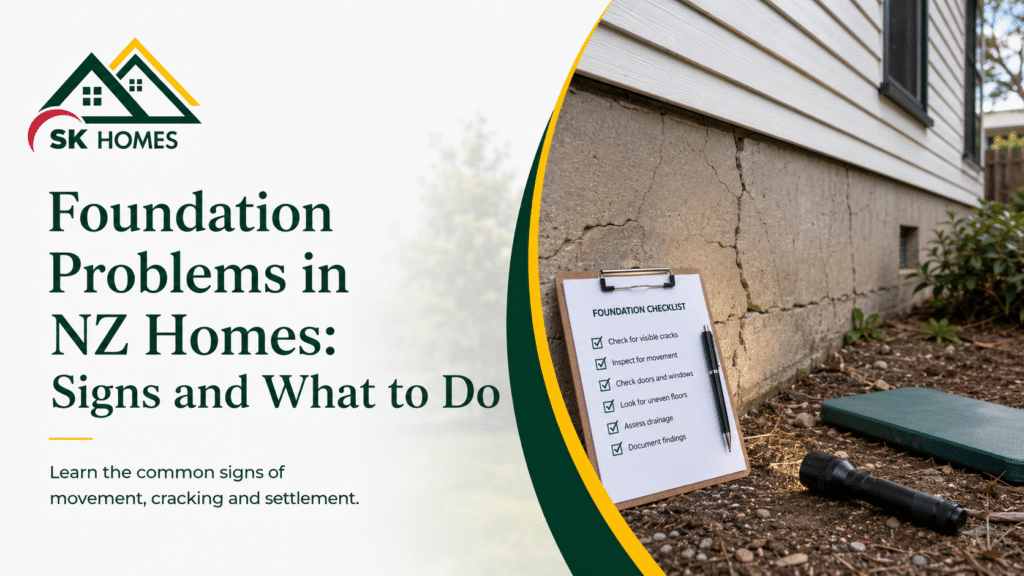
Foundation Problems in NZ Homes: Signs and What to Do
Foundation problems in NZ homes can range from minor cosmetic cracking to serious structural issues that threaten the safety and value of a property. Recognising the signs of foundation problems in NZ homes early, and knowing what to do about them, can save homeowners significant money and stress compared to discovering issues only after they have become severe.
Common Foundation Types in NZ Homes
New Zealand homes typically have one of three foundation types: timber pile foundations (common in older villas and bungalows), concrete pile foundations, or concrete slab foundations (more common in newer construction). Each type has different failure patterns and warning signs that homeowners should understand.
Signs of Foundation Problems in NZ Homes
Cracking in Walls or Ceilings
Hairline cracks in plaster are often cosmetic and related to normal building settlement, but cracks wider than 3mm, diagonal cracks, or cracks that appear suddenly and grow over time can indicate foundation movement requiring investigation.
Sticking or Misaligned Doors and Windows
Doors and windows that have started sticking, no longer close properly, or show visible gaps can indicate the building frame has shifted due to foundation movement.
Sloping or Uneven Floors
Floors that visibly slope, or where a ball placed on the floor rolls noticeably in one direction, often point to differential settlement of the foundation beneath.
Visible Pile or Foundation Damage
In homes with subfloor access, visible cracking, leaning, or rot in timber piles, or cracking in concrete piles, is a direct indicator of foundation deterioration.
Gaps Between Walls and Floors or Ceilings
New gaps appearing where walls meet floors or ceilings can indicate the structure is settling unevenly.
What Causes Foundation Problems in NZ Homes?
- Moisture and drainage issues: Poor drainage around the foundation can cause soil expansion and contraction, leading to uneven settlement
- Timber pile decay: Older timber piles can rot due to ground moisture, particularly where ground clearance and ventilation are inadequate
- Reactive clay soils: Some NZ regions have clay soils that expand significantly when wet and shrink when dry, causing foundation movement
- Tree root activity: Large trees near the foundation can extract moisture from soil unevenly, contributing to differential settlement
- Inadequate original construction: Older homes built to lower standards, or with insufficient pile depth or spacing, are more prone to movement
What Should You Do If You Suspect Foundation Problems?
If you notice signs of foundation problems in your NZ home, the appropriate first step is usually a professional building inspection to assess the extent and likely cause of the issue. For significant structural concerns, a structural engineer’s assessment provides a more detailed analysis and specific remediation recommendations. BRANZ publishes technical guidance on foundation repair methods and best practice for addressing common NZ foundation issues, which engineers and builders reference when planning remedial work. See branz.co.nz for further detail.
How Much Do Foundation Repairs Cost in NZ?
Costs vary enormously depending on the cause and extent of the problem. Minor repiling of a small section might cost $5,000 to $15,000, while a full repile of an entire home can range from $30,000 to $80,000 or more. Underpinning or major structural remediation for serious settlement issues can cost significantly more, depending on the scope of work required.
Should You Buy a Home With Foundation Problems?
A home with documented, properly remediated foundation issues can still be a reasonable purchase if the repair work was completed to a professional standard with appropriate consent. However, undiagnosed or unaddressed foundation movement represents significant risk and should always be investigated by a structural engineer before you commit to a purchase.
Frequently Asked Questions: Foundation Problems in NZ Homes
Are hairline cracks in walls always a sign of foundation problems?
No. Minor hairline cracks are common in most homes due to normal building settlement and are usually cosmetic rather than structural.
How do I know if my piles need replacing?
A building inspector or structural engineer can assess pile condition through subfloor inspection and recommend whether replacement is needed.
Can foundation problems be fixed without major construction work?
It depends on severity. Minor issues may be addressed with targeted repiling or drainage improvements, while severe structural movement often requires more extensive remediation.
Does insurance cover foundation repair in NZ?
Generally, gradual settlement and wear related foundation issues are excluded from standard home insurance, which typically only covers sudden events like earthquake damage.
How long does foundation repair take?
Minor repiling can take a few days, while major structural remediation projects can take several weeks depending on scope.
What soil types in NZ are most prone to causing foundation problems?
Reactive clay soils, found in parts of several NZ regions, are particularly known for causing foundation movement due to their expansion and contraction with moisture changes.
Can tree roots really damage a home’s foundation?
Yes. Large trees planted close to foundations can draw significant moisture from surrounding soil, contributing to uneven settlement, particularly in clay soils.
Should I get a structural engineer or a building inspector first?
A building inspector is usually the appropriate first step to assess the general signs, and they will recommend a structural engineer if the findings warrant more detailed investigation.
How urgent are foundation problems?
This depends on severity. Active, worsening movement should be investigated promptly, while stable, minor historical settlement may be lower priority.
How do I get a professional inspection to check for foundation issues?
Contact SK Homes NZ Limited at info@skhomes.co.nz or call +64 290 4504 642 to book an inspection in Auckland, Hamilton, or Palmerston North.