
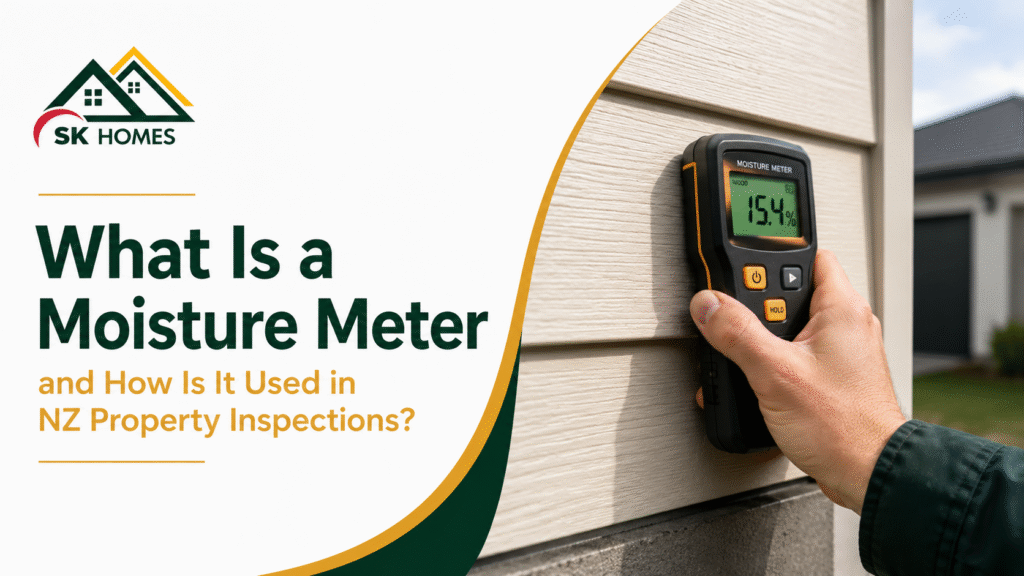
What Is a Moisture Meter and How Is It Used in NZ Property Inspections?
What is a moisture meter and how is it used in NZ property inspections is a common question for buyers trying to understand the tools building inspectors rely on. A moisture meter is a handheld electronic device used to detect the presence of moisture in building materials without needing to open up walls or remove linings. Understanding what a moisture meter is and how it is used in NZ property inspections helps buyers interpret their inspection report findings with confidence.
What Is a Moisture Meter?
A moisture meter is a diagnostic tool that measures the moisture content of building materials such as timber, plaster, and concrete. Most building inspectors in NZ use non-invasive (pinless) moisture meters, which use electromagnetic signals to detect moisture beneath the surface without damaging the material. Some inspectors also use pin-type meters, which have small probes that are pressed into the surface for a more localised reading.
How Is a Moisture Meter Used in NZ Property Inspections?
During a pre-purchase building inspection or weathertightness assessment, a building inspector will use a moisture meter to:
- Take baseline readings in areas of low risk (such as internal walls away from wet areas) to establish a normal reading for that property
- Take comparative readings around high-risk areas, window sills, deck junctions, roof penetrations, and areas with visible cracking or staining
- Identify areas where moisture levels are elevated compared to baseline, indicating potential moisture ingress
- Document specific readings with location references to include in the written inspection report
A skilled inspector understands that moisture meter readings need to be interpreted in context, readings can be affected by the type of material, recent weather, and other factors. Elevated readings indicate a need for further investigation, not necessarily confirmed damage.
What Do Moisture Meter Readings Mean?
Moisture meter readings are typically expressed as a percentage or relative scale depending on the device. BRANZ publishes the recognised NZ reference thresholds for acceptable moisture content in timber framing, which experienced assessors use as the benchmark when interpreting readings rather than relying on device-specific defaults alone (see branz.co.nz). As a general guide:
- Low readings, consistent with normal, dry building materials
- Moderate readings, may warrant monitoring or further investigation depending on location and context
- High readings, indicate likely moisture presence and typically trigger a recommendation for invasive investigation to confirm the cause and extent
It’s important to understand that a moisture meter detects the presence of moisture but does not show the cause, extent of any damage, or how long the moisture has been present. This is why elevated readings are typically followed by a recommendation for further investigation rather than an immediate conclusion about damage.
Limitations of Moisture Meters in NZ Property Inspections
While moisture meters are valuable diagnostic tools, they have limitations that NZ buyers should understand:
- Non-invasive meters typically only detect moisture within a few centimetres of the surface, and may not detect deeper moisture issues
- Readings can be affected by the type of material being tested, with different materials having different normal moisture ranges
- Surface conditions (such as metal fixings near the test point) can affect readings on pinless meters
- A single reading provides a snapshot, moisture conditions can vary with weather and time
This is why a thorough inspector takes multiple readings across the property and interprets them in the context of visual evidence, rather than relying on a single reading in isolation.
When Should Invasive Testing Follow a Moisture Meter Reading?
If a non-invasive moisture meter indicates elevated moisture in a specific area, the next step is often invasive testing, drilling a small hole and inserting a probe directly into the wall cavity to get a more accurate, deeper reading. This confirms whether the elevated surface reading reflects a genuine moisture problem within the building structure, or a more superficial issue.
Invasive testing requires the property owner’s permission, as it involves creating a small hole that needs to be patched afterward. For more information on building inspection practices, see building.govt.nz.
Frequently Asked Questions: Moisture Meter NZ Property Inspections
Are moisture meter readings 100% accurate?
No diagnostic tool is perfectly accurate. Moisture meters are a valuable screening tool but should be interpreted by an experienced inspector in conjunction with visual evidence and, where indicated, invasive testing.
Do all NZ building inspectors use moisture meters?
Most professional building inspectors carry a moisture meter as standard equipment, particularly accredited inspectors conducting NZS 4306:2005 compliant inspections.
Can I buy my own moisture meter to check a property myself?
Basic consumer moisture meters are available, but interpreting readings correctly requires training and experience. Professional inspection is strongly recommended over DIY testing.
What is the difference between pin and pinless moisture meters?
Pin-type meters use small probes pressed into the material for a localised reading. Pinless meters use electromagnetic signals to scan beneath the surface without damaging it. Most professional inspectors use pinless meters for general scanning.
Can a moisture meter detect mould?
No. A moisture meter detects moisture content, not mould directly. However, elevated moisture readings often correlate with conditions favourable to mould growth.
How many moisture meter readings should an inspector take?
A thorough inspection involves multiple readings across the property, particularly at high-risk areas, compared against baseline readings from lower-risk areas.
What should I do if my inspection report shows elevated moisture readings?
Discuss the findings with your inspector and consider commissioning invasive testing or a specialist weathertightness assessment before finalising your purchase decision.
Can weather conditions affect moisture meter readings?
Yes. Readings taken shortly after rain, or during unusually dry or humid periods, may not reflect typical conditions. An experienced inspector accounts for recent weather when interpreting results.
Do moisture meters work on all building materials?
Moisture meters are calibrated for specific material types (timber, plaster, concrete). An inspector will use the appropriate settings or device for the material being tested.
How do I book an inspection that includes thorough moisture meter testing?
Contact SK Homes NZ Limited at info@skhomes.co.nz or call +64 290 4504 642 to book a pre-purchase inspection or weathertightness assessment in Auckland, Hamilton, or Palmerston North.