
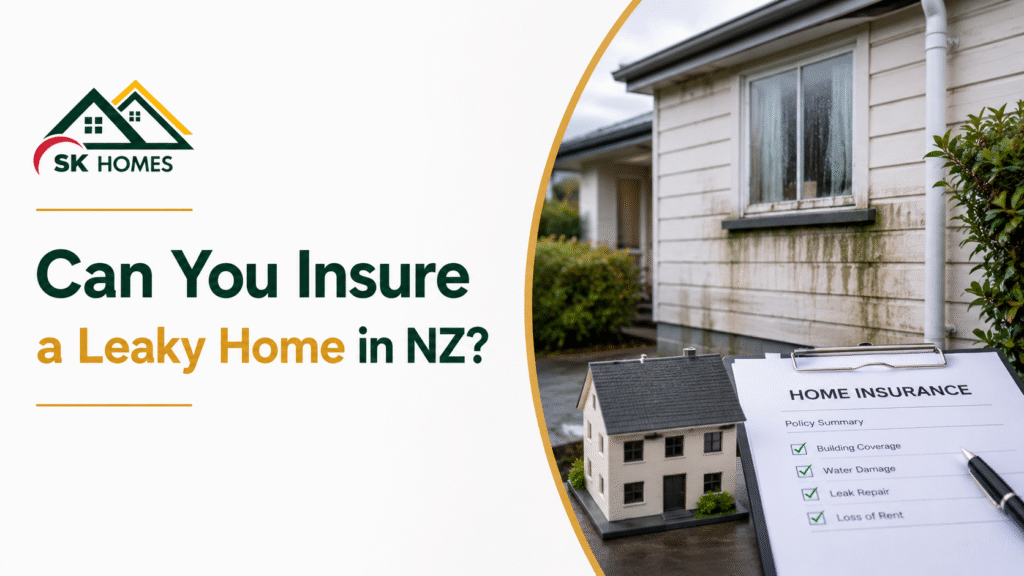
Can You Insure a Leaky Home in NZ? What Property Buyers Need to Know
Can you insure a leaky home in NZ is a critical question for anyone considering purchasing a property with weathertightness issues or a history of moisture damage. The short answer is that you can insure a leaky home in NZ, but it is often more difficult, more expensive, and may come with significant exclusions or conditions. This guide explains what NZ property buyers need to know about insuring a leaky home before they commit to a purchase.
Can You Insure a Leaky Home in NZ? The General Position
Most mainstream NZ insurers will assess a leaky home application on a case-by-case basis. Insurers typically want to know whether the weathertightness issue has been remediated, what the current condition of the cladding is, and whether there is documented evidence (such as a weathertightness report) showing the extent of any damage and repair work completed.
If a property has fully remediated weathertightness issues, full recladding completed with code compliance signed off, insurers are generally more willing to provide standard cover, sometimes with a higher premium reflecting the property’s history.
What Makes Insuring a Leaky Home in NZ More Difficult?
- Unremediated damage, if moisture ingress is ongoing or has not been professionally repaired, most insurers will decline cover or apply significant exclusions for further moisture-related damage
- Monolithic cladding without remediation, properties with original 1990s-2000s monolithic cladding that has not been reclad face higher scrutiny
- Lack of documentation, without a weathertightness report or evidence of remediation work, insurers struggle to assess risk accurately
- Previous insurance claims, a history of moisture-related claims on the property can make insurers cautious
How to Improve Your Chances of Insuring a Leaky Home in NZ
Get a Weathertightness Report
Commission a professional weathertightness assessment before applying for insurance. Documented evidence of the current condition gives insurers the information they need to make an informed underwriting decision.
Provide Evidence of Remediation
If the property has been reclad or repaired, gather all documentation, code compliance certificates, contractor invoices, and before/after photos, to support your insurance application. Remediation carried out in line with BRANZ-recommended cavity drainage and flashing standards, rather than simply reinstating the original defective cladding system, gives insurers stronger confidence the underlying cause has actually been addressed. See branz.co.nz for current recladding guidance.
Shop Around
Not all insurers assess risk the same way. Some specialist insurers are more experienced with leaky home properties and may offer cover where mainstream insurers decline.
Consider Excess and Exclusion Terms
Even where cover is available, expect higher excesses for moisture-related claims, and possible exclusions for damage related to the original weathertightness issue if it has not been fully remediated.
What Happens If You Can’t Get Standard Insurance?
If standard insurance is declined, options include specialist high-risk insurers, insurance with specific exclusions for weathertightness-related claims, or, in some cases, proceeding without insurance, which carries significant financial risk and is generally not recommended, particularly if you have a mortgage (most lenders require insurance as a condition of the loan).
Should You Buy a Leaky Home If Insurance Is Difficult to Obtain?
Difficulty obtaining insurance is itself an important signal about the property’s risk profile. If insurers are reluctant to provide cover, this should factor heavily into your purchasing decision and price negotiation. Always get a professional weathertightness assessment and understand the full remediation history before committing to purchase a property with any history of leaky building issues.
For more information on home insurance considerations, see the Insurance Council of New Zealand at icnz.org.nz.
Frequently Asked Questions: Can You Insure a Leaky Home in NZ
Will my mortgage be approved if I can’t get insurance?
No. Most NZ lenders require home insurance as a condition of approving a mortgage. Without insurance, you generally cannot proceed with a mortgage-financed purchase.
Does recladding guarantee I can get insurance?
Recladding significantly improves your chances, especially with code compliance certification, but does not guarantee acceptance, insurers still assess each application individually.
What is EQC cover and does it apply to leaky homes?
EQC (Toka Tū Ake) covers natural disaster damage, not gradual moisture damage from weathertightness failures. It is a separate scheme from standard home insurance.
How much more expensive is insurance for a leaky home?
Premiums vary significantly by insurer and property, but expect potentially 20-50% higher premiums, or more, depending on the extent of remediation and documentation provided.
Can I get insurance during the remediation process?
This is difficult. Most insurers want to see completed remediation work with code compliance before offering standard cover.
Does the body corporate insurance cover apartment weathertightness issues?
Body corporate insurance for apartments may have specific exclusions for weathertightness issues, particularly in buildings with known historical problems. Review the body corporate’s insurance policy carefully.
Should I disclose known weathertightness history when applying for insurance?
Yes. Failing to disclose known issues can void your policy if a claim is made. Always be upfront with insurers about a property’s history.
Can a weathertightness report help reduce my insurance premium?
Yes. A clean weathertightness report with no significant findings can help insurers offer more favourable terms compared to an unknown risk profile.
What insurers in NZ specialise in higher-risk properties?
Specific insurer offerings change over time. Consult an insurance broker who specialises in property insurance for current options for higher-risk NZ properties.
How do I get a weathertightness report before applying for insurance?
Contact SK Homes NZ Limited at info@skhomes.co.nz or call +64 290 4504 642 to book a weathertightness assessment in Auckland, Hamilton, or Palmerston North.