
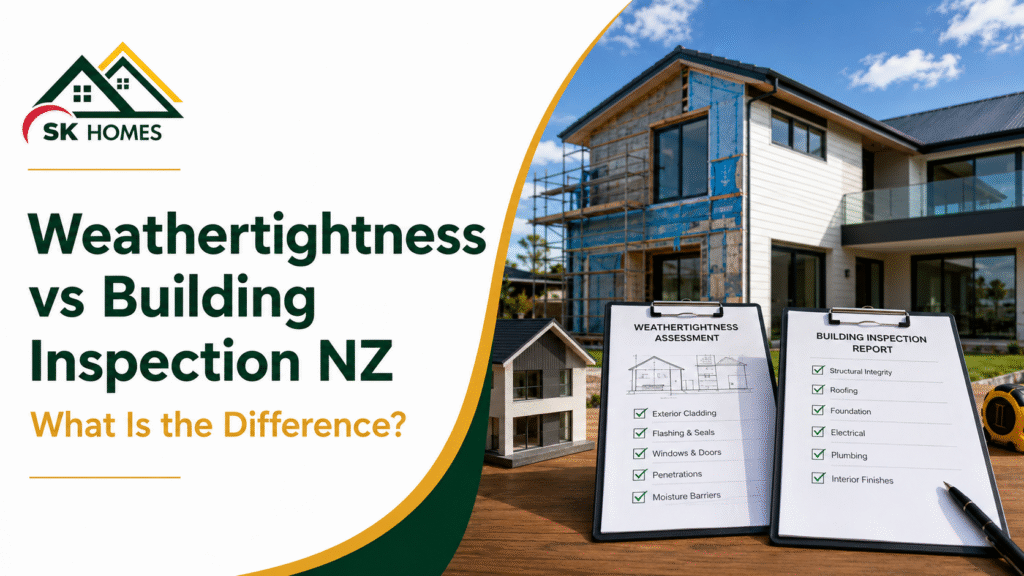
Weathertightness vs Building Inspection NZ: What Is the Difference?
Weathertightness vs building inspection NZ is a question many property buyers ask when deciding what kind of professional assessment they need before purchase. Understanding weathertightness vs building inspection NZ helps you choose the right type of report, or recognise when you need both, to properly assess a property’s condition and risk before committing to a purchase.
What Is a Building Inspection?
A pre-purchase building inspection, conducted in accordance with NZS 4306:2005, is a broad visual assessment of a property’s overall condition. It covers site and grounds, exterior, roof, subfloor, roof space, interior, wet areas, and visible services. The inspector identifies defects across the whole property and provides a general risk picture, including noting any visible weathertightness risk factors.
What Is a Weathertightness Assessment?
A weathertightness assessment is a specialist, in-depth investigation focused specifically on a building’s ability to keep water out, cladding systems, flashings, window and door junctions, decks, and roof penetrations. It typically includes moisture meter readings at multiple points and may include invasive testing (drilling small holes to check inside wall cavities) where elevated readings are found. BRANZ publishes detailed technical guides on cavity drainage systems, flashing details, and cladding installation standards, which form the technical reference point assessors use to judge whether a building’s envelope meets good building practice. See branz.co.nz for further detail.
Weathertightness vs Building Inspection NZ: Key Differences
| Factor | Building Inspection | Weathertightness Assessment |
|---|---|---|
| Scope | Whole property | Building envelope only |
| Depth | General visual | Detailed, often invasive |
| Moisture meter use | Limited/spot checks | Systematic, multiple points |
| Typical cost | $500-$900 | $400-$1,500+ |
| Best for | General due diligence | High-risk cladding properties |
When Do You Need Both?
For properties with monolithic cladding, built between 1992 and 2004, or showing visible risk factors during a standard inspection, both reports together provide the most complete picture. The building inspection gives you a broad understanding of the property’s overall condition, while the weathertightness assessment provides deep, focused investigation of the highest-risk area, the building envelope.
SK Homes NZ Limited recommends starting with a standard NZS 4306:2005 compliant building inspection. If the inspector identifies risk factors (cracking, staining, complex cladding, age-related risk), a follow-up weathertightness assessment with moisture meter testing is the next logical step.
Weathertightness vs Building Inspection NZ: Which Should You Book First?
In most cases, book the standard pre-purchase building inspection first. This gives you a broad overview and will flag whether further weathertightness investigation is warranted. Booking a weathertightness assessment without a general building inspection means you may miss issues in other parts of the property, subfloor, roof framing, electrical, plumbing, that fall outside the weathertightness scope.
For more on NZ building standards, see building.govt.nz.
Frequently Asked Questions: Weathertightness vs Building Inspection NZ
Can one inspector do both assessments?
Yes, many accredited building surveyors, including SK Homes, offer both standard building inspections and specialist weathertightness assessments.
Is a weathertightness assessment more expensive than a building inspection?
It depends on scope. A basic weathertightness assessment may cost similar to a building inspection, but invasive testing increases costs significantly.
Does a building inspection check for weathertightness at all?
Yes, a standard building inspection will note visible weathertightness risk factors, but it does not include systematic moisture meter testing or invasive investigation.
Which type of report do banks require for lending?
Banks typically require a standard pre-purchase building inspection report. A weathertightness assessment is an additional, optional due diligence step.
How do I know if I need a weathertightness assessment?
If your property has monolithic cladding, was built 1992-2004, or your building inspection flags risk factors, a weathertightness assessment is strongly recommended.
Can a weathertightness assessment replace a building inspection?
No. A weathertightness assessment only covers the building envelope. You still need a general building inspection to assess the whole property.
How long does a combined assessment take?
A combined building inspection and weathertightness assessment typically takes 3-5 hours on site, depending on property size and complexity.
Is invasive testing always needed?
No. Invasive testing is only recommended when visual inspection and moisture meter readings indicate elevated risk.
What if the vendor refuses invasive testing?
Invasive testing requires vendor permission as it involves drilling small holes. If refused, you can rely on visual and moisture meter findings, or factor the uncertainty into your purchasing decision.
How do I book both assessments with SK Homes?
Contact SK Homes NZ Limited at info@skhomes.co.nz or call +64 290 4504 642 to discuss combined assessment options in Auckland, Hamilton, or Palmerston North.