
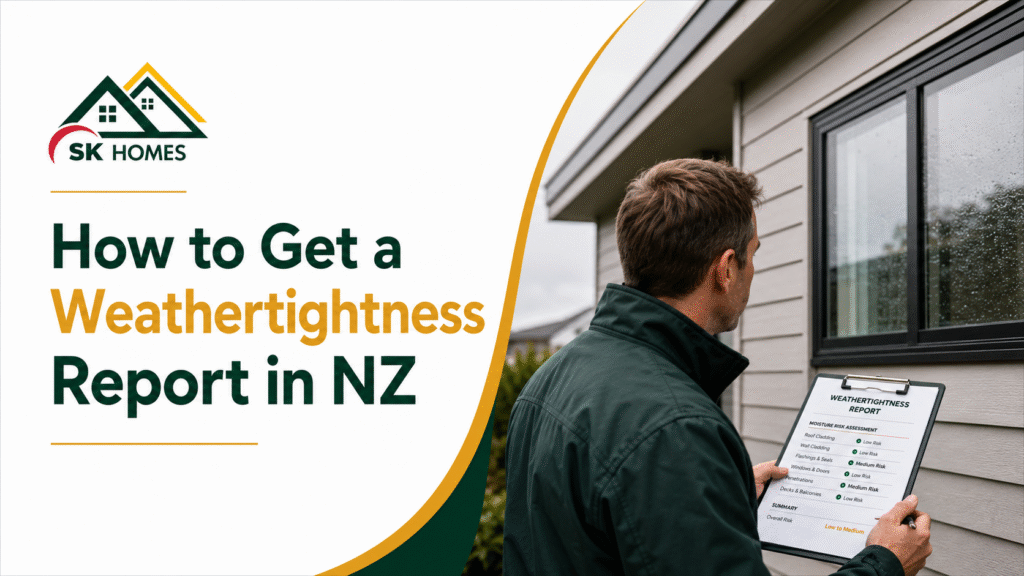
How to Get a Weathertightness Report in NZ
How to get a weathertightness report in NZ is a common question for property buyers, sellers, and homeowners concerned about moisture issues. A weathertightness report in NZ provides a specialist assessment of a building’s exterior envelope, cladding, flashings, windows, and roof junctions, to identify whether the property is at risk of, or already experiencing, moisture ingress. This guide explains how to get a weathertightness report in NZ, what it covers, and when you need one.
What Is a Weathertightness Report in NZ?
A weathertightness report in NZ is a specialist assessment focused specifically on a building’s ability to keep water out. Unlike a general pre-purchase building inspection, which covers the whole property broadly, a weathertightness report focuses in depth on cladding systems, flashings, window and door junctions, decks, parapets, and roof penetrations, the areas most likely to fail and allow moisture into the building structure.
Weathertightness reports are particularly important for properties built between 1992 and 2004 with monolithic cladding systems (such as plaster-finish EIFS), as these properties are at significantly higher risk of weathertightness failure due to design and construction practices common during that period.
How to Get a Weathertightness Report in NZ: Step by Step
Step 1: Identify Why You Need the Report
Before booking, clarify your purpose. Common reasons to get a weathertightness report in NZ include:
- Pre-purchase due diligence on a property with cladding risk factors
- Investigating suspected moisture damage in a property you already own
- Preparing for sale to disclose the property’s condition to potential buyers
- Supporting an insurance claim or dispute
- Planning recladding or remediation work
Step 2: Choose a Qualified Weathertightness Assessor
Look for an assessor with specific weathertightness and moisture investigation experience, not just general building inspection qualifications. Many accredited building surveyors, including SK Homes NZ Limited, offer weathertightness-specific assessments using moisture meters and invasive testing techniques where appropriate.
Step 3: Understand What the Inspection Will Involve
A thorough weathertightness report in NZ typically involves:
- Visual inspection of all cladding surfaces, looking for cracking, staining, and failed sealant joints
- Inspection of flashings at windows, doors, and roof junctions
- Moisture meter readings taken at multiple points around the building, particularly at risk areas like deck junctions and window sills
- Assessment of ground clearances and drainage around the building perimeter
- Where elevated moisture readings are found, recommendation for invasive testing (drilling small holes to insert a probe) to confirm the extent of any damage
Step 4: Book the Assessment
Contact your chosen assessor to arrange a suitable time. For pre-purchase situations, this should be done within your sale and purchase agreement’s due diligence period. SK Homes NZ Limited can be contacted at info@skhomes.co.nz or +64 290 4504 642 to arrange a weathertightness assessment in Auckland, Hamilton, or Palmerston North.
Step 5: Receive and Review Your Report
Your weathertightness report in NZ should include moisture meter readings, photographic evidence of any risk factors or visible defects, and clear recommendations, whether the property appears sound, requires monitoring, or needs further invasive investigation or remediation. BRANZ (the Building Research Association of New Zealand) publishes recognised technical guidance on acceptable moisture content thresholds for timber framing and testing methodology, which reputable assessors reference when interpreting readings. See branz.co.nz for further detail on moisture testing standards.
What Does a Weathertightness Report in NZ Cost?
The cost of a weathertightness report in NZ varies depending on the scope of the assessment. A standard visual and moisture-meter assessment typically costs $400-$700. If invasive testing is required (drilling and probing wall cavities), costs may increase to $800-$1,500 or more depending on the number of test points required.
When Should You Get a Specialist Weathertightness Report Instead of a Standard Building Inspection?
A standard pre-purchase building inspection includes a general assessment of exterior cladding and will flag obvious risk factors. However, a dedicated weathertightness report in NZ is recommended when:
- The property has monolithic cladding (plaster finish, stucco, or EIFS systems)
- The building was constructed between 1992 and 2004
- There is visible staining, cracking, or evidence of past repairs on the cladding
- The property has a complex roof design with multiple junctions and penetrations
- A standard building inspection has recommended further investigation
For more information on building standards in NZ, visit building.govt.nz.
Frequently Asked Questions: Weathertightness Report NZ
How long does it take to get a weathertightness report in NZ?
A standard weathertightness assessment takes 2-3 hours on site, with the written report typically delivered within 2-3 working days.
Is a weathertightness report the same as a building inspection?
No. A building inspection covers the whole property broadly. A weathertightness report focuses specifically and in depth on moisture risk in the building envelope.
Do I need a weathertightness report for every property purchase?
Not every property requires one, but it is strongly recommended for properties with monolithic cladding or built during the 1992-2004 high-risk period.
Can a weathertightness report detect all moisture damage?
A visual and moisture-meter assessment can identify elevated risk and surface-level moisture, but invasive testing is required to confirm the full extent of any hidden damage inside wall cavities.
What happens if my weathertightness report finds elevated moisture readings?
Elevated readings indicate a risk of moisture ingress and warrant further invasive investigation to determine the extent and cause before you make a purchasing decision or begin remediation planning.
Can I use a weathertightness report to negotiate the purchase price?
Yes. Documented moisture risk findings provide an objective basis for price negotiation or for requesting the vendor address issues before settlement.
Does insurance cover weathertightness repairs in NZ?
Generally no, most standard home insurance policies exclude gradual damage from moisture ingress. Specific weathertightness remediation is rarely covered.
How do I know if my property has monolithic cladding?
Monolithic cladding has a smooth, continuous plaster-like finish with no visible joints. If you are unsure, a building inspector or weathertightness assessor can identify the cladding type during inspection.
What is the difference between a weathertightness report and a LIM report?
A LIM (Land Information Memorandum) is a council records document. A weathertightness report is a physical, hands-on assessment of the building’s actual condition.
How do I book a weathertightness report with SK Homes?
Contact SK Homes NZ Limited at info@skhomes.co.nz or call +64 290 4504 642 to book an assessment in Auckland, Hamilton, or Palmerston North.