
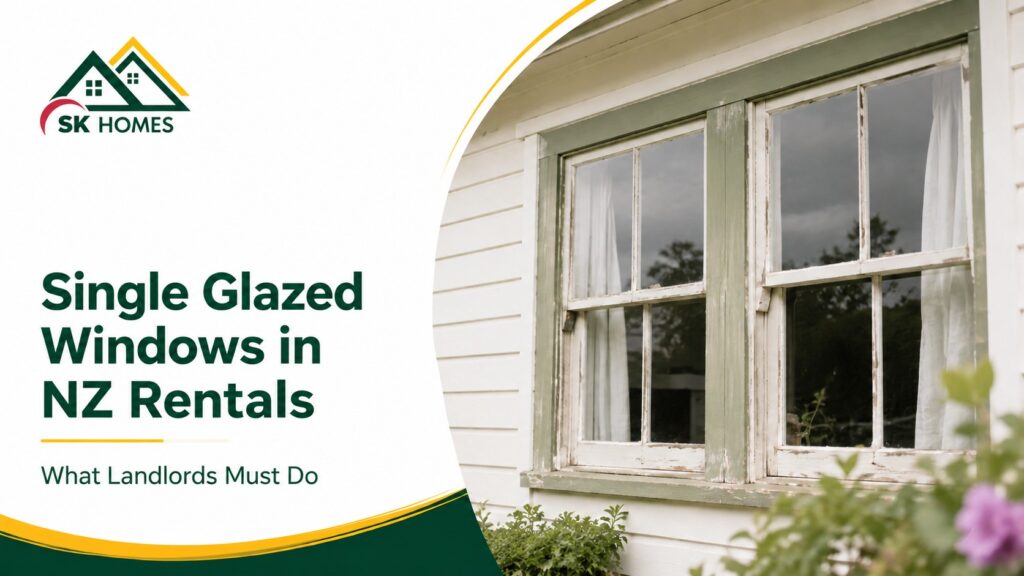
Single Glazed Windows in NZ Rentals: Compliance and Heating Issues
Single glazed windows in NZ rentals are a major contributor to heat loss and condensation, and a common reason properties struggle to meet the heating standard.
Walk into almost any rental property built before 1990 in Auckland, Hamilton, or Palmerston North and you will find single glazed windows. In many cases, these windows are also wooden framed, original to the building, and in varying states of repair. They are cold to the touch in winter. They run with condensation on cold mornings. And they are making it much harder for landlords to meet the Healthy Homes Standards.
This article covers what single glazed windows actually mean for Healthy Homes compliance, the real-world costs involved, and the practical options available to landlords.
Why Single Glazing is Such a Problem in NZ
Single glazed glass has an R-value of approximately 0.15 to 0.18 – almost no thermal resistance. On a cold Auckland night when outdoor temperatures drop to 10 degrees Celsius, the inside surface of a single glazed window can be only slightly warmer than the outside. Warm, moist air inside the house hits that cold surface and water vapour condenses onto the glass.
In a typical three-bedroom Auckland rental with 10 single glazed windows, the combined window area might be 15 to 20 square metres of near-zero insulation. In winter, those windows are actively pulling heat out of the house. Any fixed heater in the main living area has to work significantly harder just to maintain a comfortable temperature – and in many cases, the heating capacity required under the Healthy Homes Heating Standard cannot actually be achieved in practice because the thermal envelope of the building is too poor.
The Condensation Chain Reaction
Condensation on single glazed windows is not just an aesthetic problem. It sets off a sequence of issues that affect the property and the people living in it.
Water runs down the glass and collects on the windowsill and in the rebate. Wooden frames absorb this moisture repeatedly, softening and eventually rotting. The sill becomes a reservoir for standing water. Mould grows – first on the window frame and sill, then spreading to the adjacent wall surface. In poorly ventilated spaces like bedrooms, this mould can become established across significant areas of wall and ceiling, particularly in corners near windows.
This is not a minor hygiene issue. Mould in the home is directly linked to respiratory problems, asthma exacerbation, and other health effects – particularly in children and people with existing health conditions. New Zealand has some of the highest rates of childhood asthma in the developed world, and cold, damp housing is a known contributing factor.
How Single Glazing Affects Healthy Homes Compliance
Single glazing is not directly prohibited by the Healthy Homes Standards. The standards do not require double glazing. However, single glazing creates compliance pressure across multiple standards simultaneously:
Heating Standard
The heating capacity calculation under the Heating Standard uses a formula that accounts for the thermal performance of the building envelope – including glazing. Where a property has significant single glazing, the calculated heating requirement for the main living area will be higher. An undersized heat pump that might have been compliant in a well-insulated property may be non-compliant in a property with extensive single glazing.
Draught Stopping Standard
As wooden single glazed windows age, they develop gaps. The Draught Stopping Standard requires these gaps to be addressed. Where frames have deteriorated beyond practical repair, draught stopping may require window replacement rather than simple sealing.
Ventilation Standard
The Ventilation Standard requires openable windows in habitable rooms. Some older wooden windows have been painted shut or have sashes that no longer function. Non-opening windows in bedrooms or living areas are a ventilation compliance issue.
What Assessors Check During an Inspection
During a Healthy Homes assessment, SK Homes NZ inspects all windows and assesses:
- Whether all habitable rooms have openable windows meeting the minimum ventilation area requirements
- Whether window frames have gaps causing unreasonable draughts
- Visible condensation damage – staining, mould, and deterioration of frames and sills
- Whether any painted-shut or non-functional windows are present in habitable rooms
- The impact of glazing type on the heating capacity calculation for the main living area
Practical Options for Landlords
Secondary Glazing
Secondary glazing involves fitting an additional pane of glass or acrylic inside the existing window reveal. It significantly reduces heat loss and condensation without full window replacement. Costs typically run $300 to $800 per window installed, depending on size and the system chosen. This is a cost-effective interim solution for landlords with many windows to address.
Window Film
Insulating window film applied to single glazed glass provides a modest improvement in thermal performance and some reduction in condensation. It is the lowest cost option at $20 to $80 per window DIY – but the performance improvement is limited compared to secondary glazing or replacement.
Full Window Replacement
Replacing single glazed wooden windows with double-glazed aluminium or uPVC units delivers the most significant performance improvement. Condensation on double-glazed windows is dramatically reduced because the inner pane stays warmer. Heat loss is reduced by 50% or more compared to single glazing.
The cost is significant – typically $1,000 to $2,500 per window installed in New Zealand, depending on size and specification. For a property with 10 windows, budget $12,000 to $25,000. However, this is a capital improvement that affects the value and rentability of the property, and may be eligible for the Healthy Homes-related Warmer Kiwi Homes funding where applicable.
Draught Stopping – the Minimum You Must Do
Regardless of whether you replace windows, draught stopping is required now. Install draught strip sealing around window frames and sashes where gaps are present. This is not expensive – a competent handyman can work through a typical property in a day. The Healthy Homes Standards require it, and a Tenancy Tribunal will not accept “we are planning a window upgrade” as a reason for current non-compliance with the draught stopping standard.
Frequently Asked Questions
Does Healthy Homes require double glazing?
No. The Healthy Homes Standards do not specifically require double glazing. The standards require adequate heating, draught stopping, and ventilation – but do not prescribe glazing type. Double glazing makes it much easier to achieve compliance across those standards, but it is not mandatory.
My rental has single glazed windows throughout. Am I non-compliant?
Not automatically. If your windows open adequately for ventilation, have no unreasonable draughts, and your heating system can still achieve 18 degrees Celsius in the main living area, you may be compliant. A Healthy Homes assessment will confirm your position.
Is there funding available for window upgrades in NZ?
The Warmer Kiwi Homes programme provides subsidies for insulation and heating in owner-occupied homes – not generally for rental properties. Some regional council programmes and energy efficiency initiatives may offer support. Check with EECA and your local council for current availability.
Can I use window film to reduce condensation?
Window film provides modest improvement in thermal performance and some reduction in condensation. It is better than nothing but significantly less effective than secondary glazing or window replacement.
Book a professional Healthy Homes Assessment with SK Homes NZ Limited. We help landlords in Auckland, Hamilton, and Palmerston North achieve compliance with the Healthy Homes Standards.
📧 info@skhomes.co.nz | 🌐 skhomes.co.nz | 📞 029 045 0464
Related Articles
- Why Old Wooden Windows Are Failing NZ Rental Properties
- Draught Stopping in Older NZ Homes
- The Healthy Homes Standards NZ: A Complete Guide
Single Glazed Windows In NZ Rentals: Key Points for NZ Property Owners
Single glazed windows in NZ rentals are a major factor in rental properties failing the heating standard. Tenancy Services NZ outlines the interaction between window type and required heating capacity in its compliance guidance. For more information, visit Tenancy Services NZ.