
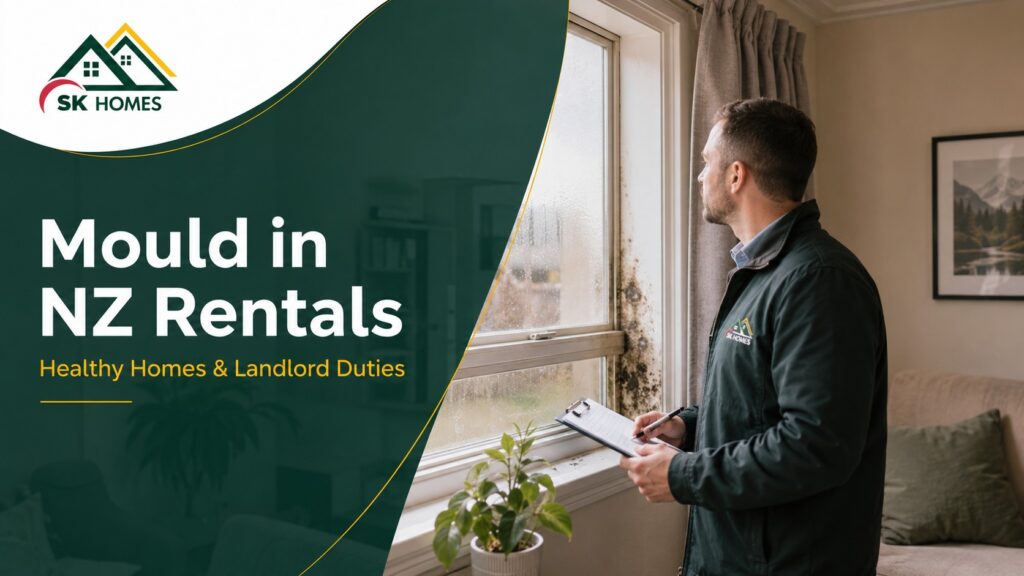
Mould in NZ Rental Properties: The Healthy Homes Standards and Landlord Obligations
Mould in NZ rental properties is one of the most common and most misunderstood issues landlords face, raising real questions about who is responsible for prevention and remediation.
Mould is one of the most common complaints in New Zealand rental properties. It is also one of the most misunderstood in terms of who is responsible for it and what the Healthy Homes Standards require. This guide covers what landlords need to know about mould, how the Healthy Homes Standards relate to it, and what the law actually requires.
Is Mould Covered by the Healthy Homes Standards?
Mould is not a separate Healthy Homes Standard, but it is closely related to several of them. The Healthy Homes Standards address the underlying conditions that cause mould – moisture, lack of ventilation, and draughts. If a property meets all five standards, it is significantly less likely to develop serious mould problems than a property that does not.
The three standards most directly relevant to mould are:
- Ventilation: Adequate ventilation removes moisture-laden air from the property, reducing condensation on walls and ceilings
- Moisture ingress and drainage: Efficient drainage and a subfloor moisture barrier reduce the moisture entering the property from the ground and exterior
- Heating: Adequate heating helps maintain temperatures above the dew point, reducing condensation that leads to mould growth
A rental property that has poor ventilation, moisture entering from a wet subfloor, and insufficient heating is at high risk of mould. The Healthy Homes Standards were specifically designed to address these contributing factors.
Who Is Responsible for Mould in a Rental Property?
Mould responsibility is a significant source of disputes between landlords and tenants in New Zealand, and the answer depends on the cause of the mould.
Landlord Responsibility
Landlords are responsible for mould that is caused by the structure of the property or by the landlord’s failure to meet their obligations. This includes:
- Mould caused by moisture entering through the roof, walls, or subfloor due to poor construction or maintenance
- Mould resulting from inadequate ventilation – for example, a bathroom with no extractor fan that does not meet the Healthy Homes ventilation standard
- Mould related to moisture in a subfloor that lacks the required ground moisture barrier
- Mould caused by blocked gutters or poor drainage that directs water toward the building
- Pre-existing mould that was present when the tenancy began
If any of these underlying causes relate to a failure to meet the Healthy Homes Standards, the landlord is in a particularly difficult position, because the tenant can raise both the mould and the standards non-compliance at the Tenancy Tribunal.
Tenant Responsibility
Tenants are responsible for mould that results from their behaviour or lifestyle. This includes:
- Mould caused by not using extractor fans or ventilation provided
- Mould caused by drying washing indoors without adequate ventilation
- Mould resulting from keeping the property very cold to save on heating costs
- Not reporting signs of mould to the landlord promptly
In practice, the distinction between landlord and tenant responsibility for mould is often disputed and not always clear-cut. Many mould problems result from a combination of structural factors (landlord) and occupant behaviour (tenant). The Tenancy Tribunal considers all circumstances when determining responsibility.
The Landlord’s Obligation Under the Residential Tenancies Act
Under the Residential Tenancies Act, landlords are required to provide the property in a reasonable state of cleanliness and in a good state of repair. This general obligation applies to mould independently of the Healthy Homes Standards.
Tenancy Services guidance specifically addresses mould and dampness. If mould is present in a rental property at the start of a tenancy, the landlord should address it before the tenant moves in. If significant mould develops during a tenancy and is caused by the property’s structure rather than the tenant’s behaviour, the landlord is responsible for remediation.
Landlords who ignore mould complaints can face applications to the Tenancy Tribunal, which can order the landlord to carry out remediation work and may award the tenant exemplary damages.
How the Healthy Homes Standards Reduce Mould Risk
Meeting all five Healthy Homes Standards significantly reduces the conditions that allow mould to develop and spread in a rental property. Here is how each relevant standard contributes:
Ventilation Standard
Extractor fans in kitchens and bathrooms remove moisture-laden air at the source – when cooking, showering, and bathing. Openable windows in all habitable rooms allow cross-ventilation to reduce humidity throughout the property. Properties without adequate ventilation trap moisture inside, which condenses on cool surfaces and leads to mould growth.
Moisture Ingress and Drainage Standard
A ground moisture barrier in the subfloor prevents moisture from the ground rising into the building structure. In New Zealand, many older homes have significant moisture problems originating from the subfloor – the ground releases moisture that works its way up through floor joists and into living spaces. Efficient drainage prevents water pooling around the building after rain, which can cause moisture to enter the building envelope.
Heating Standard
Adequate heating keeps surface temperatures above the dew point, reducing condensation. Cold surfaces – particularly around windows and in corners – are where condensation forms first and where mould typically starts. A property that can maintain 18°C in the main living area is less prone to this problem than a property with inadequate heating.
Draught Stopping Standard
While draught stopping does not directly address moisture, a draughty property is harder to keep warm. Cold air entering through gaps reduces the effectiveness of heating and contributes to the temperature differentials that cause condensation.
What Landlords Should Do About Mould
If you own a rental property that has had mould issues, or that you want to protect against future mould problems, here is a practical approach:
- Address the cause, not just the symptom. Cleaning mould off a wall without fixing the underlying moisture or ventilation problem will result in the mould returning. Identify why the mould is occurring before treating it.
- Check the five Healthy Homes Standards. If your property does not meet the ventilation, moisture, or heating standards, that is likely contributing to mould conditions. Bringing the property into compliance addresses the root causes.
- Document pre-tenancy condition. Before a new tenancy begins, photograph the property thoroughly including walls, ceilings, and the subfloor. This provides evidence of the condition at the start if a dispute arises.
- Respond promptly to mould reports. When a tenant reports mould, inspect the property and assess the cause. Ignoring mould reports is a common reason landlords face Tribunal applications.
- Get a professional assessment if you are unsure. An independent Healthy Homes assessment identifies any moisture, ventilation, or drainage issues and provides a written record of the property’s compliance position.
A Note on Black Mould
“Black mould” is a term often used in relation to rental properties in New Zealand. Most mould that appears in rental properties is not the highly toxic Stachybotrys chartarum often associated with the term – it is more commonly Cladosporium or Aspergillus, which are common household moulds that grow in damp conditions.
However, all mould poses health risks to occupants, particularly those with respiratory conditions, asthma, or compromised immune systems. Children and the elderly are especially vulnerable. The health impacts of mould in rental properties are well-documented in New Zealand research, and addressing the conditions that cause mould is an important part of providing a healthy home.
If significant mould is found in a property, professional remediation is recommended. Surface cleaning of mould with household products is a short-term measure and does not address the spores embedded in the material.
How SK Homes NZ Can Help
At SK Homes NZ, our Healthy Homes assessments cover all five standards – including the moisture ingress and drainage standard and the ventilation standard that are most closely related to mould risk. We physically inspect subfloors, check drainage, verify extractor fan installation and operation, and check for draughts that contribute to cold surfaces and condensation.
If your property has had mould problems or you want to understand its moisture and ventilation profile, a professional assessment is a practical starting point. Our written report gives you a clear picture of the property’s condition and any compliance gaps.
We are fully independent and do not sell insulation, heaters, or remediation products.
Phone: +64 290 4504 642
Email: info@skhomes.co.nz
Website: skhomes.co.nz
Serving landlords in Auckland, Hamilton, and Palmerston North.